
How to Set Up Budget Teleprompters for Scripted Daily Video Clips Guide
Here’s the ugly truth: I’ve watched hundreds of creators burn out trying to memorize daily scripts. They stare at the lens, forget a punchline, reset, curse, and waste three hours recording a ninety-second clip. It’s exhausting. When I first started churning out high-frequency social content, I thought using a teleprompter was cheating—or worse, that it would make me sound like an unhinged local news anchor reading a hostage note. Then I tested a cheap forty-dollar plastic rig off Amazon. My workflow collapsed from a three-hour slog into a twenty-minute breeze. You don’t need a five-thousand-dollar studio broadcast setup to get crisp, eye-level delivery. You just need to know how to trick your brain, dial in your hardware, and hack your scroll speed so you actually sound like a human being.

- • The Gear Breakdown: What to Buy (And What to Avoid)
- • Mounting and Calibration: The Mechanics of Eyeline
- • Formatting Your Scripts for Conversational Delivery
- • Software Selection and Speed Calibration
- ↳ How do I stop looking like I'm reading a teleprompter?
- ↳ What is the best lighting setup to avoid glass reflections?
- ↳ Can I use my primary smartphone as both the camera and the prompter?
- ↳ How long should my daily video scripts be for maximum engagement?
Key Takeaways & Quick Overview
AI Verified
- ✔How to set up budget teleprompters for scripted daily video clips guide here’s the ugly truth: i’ve watched hundreds of creators burn out trying to memorize daily scripts.
- ✔They stare at the lens, forget a punchline, reset, curse, and waste three hours recording a ninety-second clip.
- ✔When i first started churning out high-frequency social content, i thought using a teleprompter was cheating—or worse, that it would make me sound like an unhinged local news anchor reading a hostage note.
- ✔Then i tested a cheap forty-dollar plastic rig off amazon.
The Gear Breakdown: What to Buy (And What to Avoid)
Let’s get one thing straight. The market is flooded with overpriced teleprompters made of machined aluminum that cost more than your camera body. Ignore them. If you’re producing scripted daily video clips for TikTok, Instagram Reels, or YouTube Shorts, your gear needs to be fast, modular, and cheap. I’ve tested rigs that rattle in the wind, glass that turns your footage greenish, and clamps that snap if you look at them wrong.
Stick to lightweight, modular plastic-and-cloth hood designs. Brands like Desview, Padcaster, or generic equivalents usually run between $50 and $90. These units use a beamsplitter glass angled at 45 degrees, reflecting your text while letting your camera lens shoot straight through the glass unobstructed. Never buy a teleprompter with tinted mirror glass. You want optical-grade beamsplitter glass with at least a 70/30 or 80/20 light transmission ratio. If your glass is too dark, your camera sensor starves for light, forcing you to crank up your ISO and drowning your daily clips in ugly digital noise.
For your display device, avoid bulky tablets unless you’re filming in a stationary studio. An older smartphone—like an iPhone SE or a beat-up Android—is actually superior for budget setups. It’s lighter, easier to clamp onto the teleprompter tray, and far less likely to cause your tripod head to slowly droop mid-sentence from the front-heavy weight distribution.
Mounting and Calibration: The Mechanics of Eyeline
The biggest giveaway that someone is reading a prompter isn’t their cadence; it’s their eyes darting back and forth like they’re watching a tennis match. This happens because the camera lens and the text are misaligned. Let’s fix that right now.
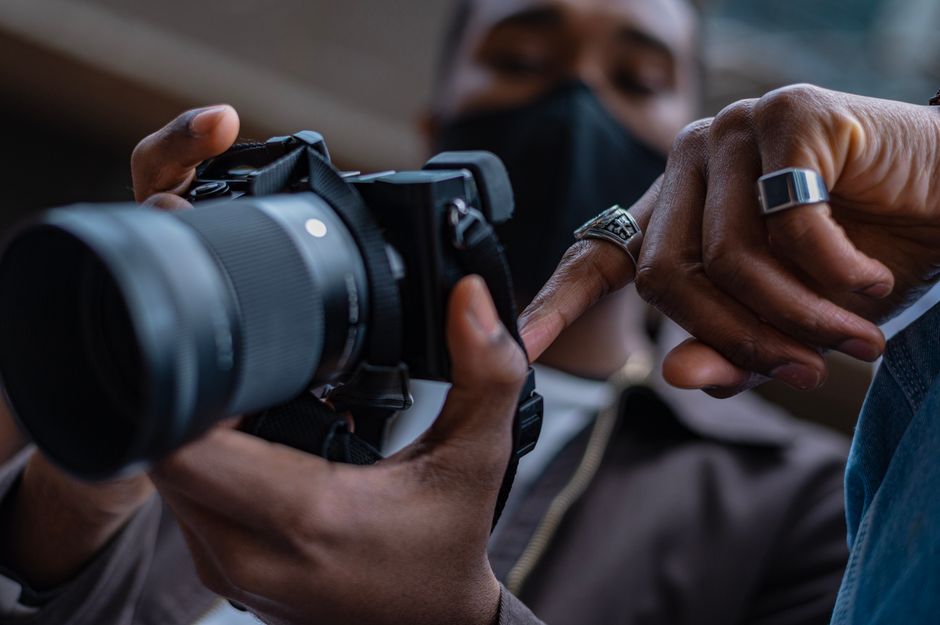
Mount your tripod securely, and attach the teleprompter base plate. Slide your camera (or primary recording smartphone) into position behind the glass hood. Here is where most beginners fail: they mount the camera too low. Your camera lens must sit dead-center behind the glass. If your lens is sitting at the bottom edge of the glass, your eyes will wander downward, making you look insecure or evasive to the viewer. According to industry studies like Wistia video production benchmarks, viewer retention plummets the second eye contact breaks.
Next, adjust the drawstring cloth hood around your camera lens. Pull it tight and secure the velcro. Light leaks are public enemy number one. If ambient light from a desk lamp or window sneaks in behind the glass, it will bounce off your camera lens element and create a milky, washed-out haze across your footage. Trust me on this: check your monitor for glare before you hit record, or you’ll be re-shooting your entire day’s batch.
Formatting Your Scripts for Conversational Delivery
Writing for the eye is entirely different from writing for the ear. If you copy-paste a traditional essay or blog post into your teleprompter app, you are going to sound like a robot. I’ve seen seasoned writers crash and burn because their script syntax was too formal.
You need to write like you talk over a cold beer with a friend. Break your sentences down into micro-phrases. Use an abundance of line breaks. Instead of writing a massive block of text, format your script so each line contains only three to five words:
- Most people fail
- Because they write essays
- Instead of talking.
This formatting forces your eyes to chunk information rapidly without losing your place. Furthermore, load up on punctuation. Use em-dashes (—) to signal natural pauses, ellipses (…) where you want to drop your cadence, and ALL CAPS for words that require vocal emphasis. When you look at professional journalism guidelines for direct address, the golden rule is natural cadence over rigid grammar. Your teleprompter app is a rhythm tool, not a grammar textbook.
Software Selection and Speed Calibration
You don’t need a subscription-based enterprise teleprompter suite. Free apps like PromptSmart, Teleprompter Premium, or even browser-based prompters do the job just fine. What matters isn’t the app logo; it’s the scrolling mechanism.
Avoid static timed scrolling. If your scroll speed is set to a rigid 120 words per minute, the second you stumble over a word, the script will march right past you, forcing you to panic and improvise. Instead, use voice-activated scrolling apps (like PromptSmart) that track your spoken voice in real-time, or use a Bluetooth remote control to manually pace the text with your thumb hidden out of frame.
Set your font size larger than you think you need—around 48pt to 60pt. If you’re squinting to read the text, your eyes will strain, your pupils will dilate, and your face will tense up. A relaxed face translates to high audience trust.
Frequently Asked Questions
How do I stop looking like I’m reading a teleprompter?
Widen your stance, keep your distance from the camera lens (at least 3 to 4 feet away if possible), and use a larger font size. When the text is too small, your eyes track left and right visibly. Furthermore, inject conversational filler words and pauses into your script formatting so your delivery mimics spontaneous thought rather than rote memorization.
What is the best lighting setup to avoid glass reflections?
Keep your key light positioned slightly above and to the sides of the teleprompter rig, never directly behind the camera pointing into the glass. If you have windows in the room, pull your blinds down or use blackout curtains. Any stray light hitting the front of the beamsplitter glass will cause a ghost image of your face to appear in the reflection.
Can I use my primary smartphone as both the camera and the prompter?
No. You need a separate device. The teleprompter glass sits directly in front of the camera lens, meaning the camera must shoot through the glass while the text is displayed on a separate screen (like an old phone, tablet, or monitor) sitting flat beneath the hood, reflecting upward.
How long should my daily video scripts be for maximum engagement?
For short-form platforms like TikTok, Instagram Reels, and YouTube Shorts, aim for 130 to 150 words total. This translates to roughly 50 to 60 seconds of speaking time at a punchy, engaging conversational pace.