
Simple Ways to Capture Low-light City Vlogs During Uk Winter Months Guide
Here’s the ugly truth about trying to film a city vlog in the UK between November and February: by the time you finish your coffee, the sun is already plotting its escape. You’re left stumbling through pitch-black alleys in Manchester or a dreary, drizzle-soaked Soho at 4:00 PM, wondering why your footage looks like a muddy oil painting. I’ve frozen my fingers off in sub-zero winds outside King’s Cross and watched my batteries die faster than a cheap smartphone in a snowbank. But if you want that moody, Blade Runner-esque cinematic grit, winter is actually prime time. You just need to stop fighting the darkness and start leaning into it. Let’s break down how to capture killer low-light city vlogs when the British winter throws its worst your way.

- • Why UK Winter Nights Destroy Your Footage (And How to Fix It)
- • Choosing the Right Gear for Freezing Urban Environments
- • Mastering Practical Lighting in British Cities
- • Audio Survival in the Wind and Rain
- ↳ What is the best camera setting for low-light city vlogging in the winter?
- ↳ How do I stop my camera battery from dying in the cold UK weather?
- ↳ Should I shoot in 4K or 1080p for night vlogs?
- ↳ How do I protect my gear from rain and snow?
Key Takeaways & Quick Overview
AI Verified
- ✔Simple ways to capture low-light city vlogs during uk winter months guide here’s the ugly truth about trying to film a city vlog in the uk between november and february: by the time you finish your coffee, the sun is already plotting its escape.
- ✔You’re left stumbling through pitch-black alleys in manchester or a dreary, drizzle-soaked soho at 4:00 pm, wondering why your footage looks like a muddy oil painting.
- ✔I’ve frozen my fingers off in sub-zero winds outside king’s cross and watched my batteries die faster than a cheap smartphone in a snowbank.
- ✔But if you want that moody, blade runner-esque cinematic grit, winter is actually prime time.
Why UK Winter Nights Destroy Your Footage (And How to Fix It)
Let’s look at the data. According to historical Met Office climate records, British winter days are short, gray, and aggressively damp. When night falls—which happens shockingly early—you aren’t just dealing with low light. You’re dealing with atmospheric soup: fog, mist, horizontal drizzle, and harsh sodium streetlamps casting a sickly orange or green hue over everything.
Most creators make the fatal mistake of cranking their ISO to max and hoping for the best. Big mistake. You end up with digital noise so thick you could slice it with a butter knife. Instead, you need to master your exposure triangle.
* Wide apertures are mandatory: Leave the variable zoom kit lenses at home. Pack a fast prime lens—a 24mm or 35mm f/1.8 lets in mountains of light.
* Embrace the grain: A bit of organic sensor noise looks like cinematic film grain. Digital mud from an ISO 12,800 boost just looks broken.
* Watch your shutter speed: Keep it at double your frame rate unless you want blurry motion trails, though a little blur on moving black cabs actually adds to the urban chaos.
Choosing the Right Gear for Freezing Urban Environments
I learned this lesson the hard way in Edinburgh: gear fails in the cold. Lithium-ion batteries love to lie to you. Your camera screen will read 60% capacity one second, and then the whole rig will flatline because a Baltic wind sliced down the Royal Mile.
When you’re out vlogging the UK winter streets, minimalism wins. You cannot afford to stand on a freezing pavement fumbling with lens changes while wet sleet ruins your sensor. Rig your camera before you leave your flat. Keep a spare battery in an inside pocket pressed against your body heat—yes, literally in your armpit or inner jacket pocket.
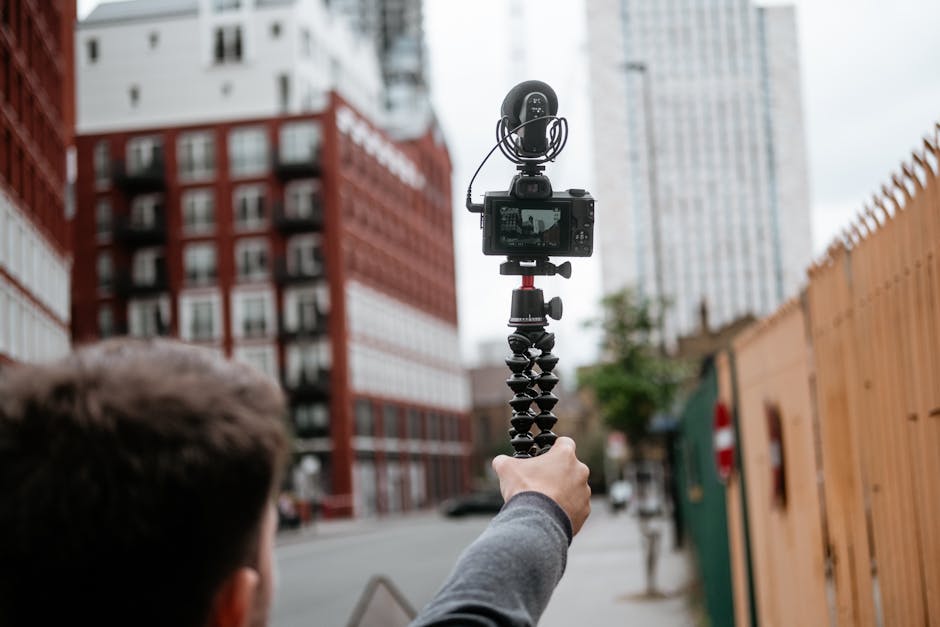
For stabilization, forget heavy tripods. You want a compact gimbal or a sturdy desktop tripod you can jam against your chest as a makeshift brace. According to advanced tutorials found on Sony Alpha Universe technical guides, stabilizing your core rather than relying purely on digital stabilization yields significantly sharper handheld night shots.
Mastering Practical Lighting in British Cities
You don’t need a massive LED panel blinding pedestrians on Oxford Street. In fact, pulling out a huge light panel makes you look like a walking tourist target. Instead, use the city’s built-in lighting design.
The UK does pubs, illuminated Victorian shop fronts, and brutalist architecture exceptionally well after dark. Position yourself so the neon sign of a late-night kebab shop or the warm glow of a traditional boozer hits the side of your face. This creates a natural Rembrandt lighting effect.
* Hunt for reflections: Puddles are gold. Point your camera low toward wet pavement to catch doubled-up neon signage.
* Avoid direct overhead lights: Streetlights positioned directly above you cast harsh shadows under your eyes, making you look like a sleep-deprived zombie. Step forward or backward to catch light at an angle.
* Use mini pocket lights sparingly: If you must use an RGB pocket light, dial it down to 10% warmth. Do not blast people with harsh white light; it ruins the moody ambiance of a winter night walk.
Audio Survival in the Wind and Rain
Nothing ruins a good low-light vlog faster than audio that sounds like a jet engine taking off. British winter weather means wind—lots of it. If you’re shooting along the Thames or on an exposed bridge in Newcastle, naked shotgun mics are useless.
Throw away the foam deadcat that came in the box. Invest in a heavy-duty furry wind muff (a proper deadcat). If it’s actively pissing down rain, wrap your microphone housing in a small plastic bag or use a specialized rain cover, but ensure the furry exterior remains exposed so it can break up the wind shear. Speak clearly, project from your diaphragm, and don’t be afraid to record voiceovers later in your warm room if the elements completely drown out your on-camera delivery.
Frequently Asked Questions
What is the best camera setting for low-light city vlogging in the winter?
Stick to a shutter speed double your frame rate (e.g., 1/50s for 24fps), open your aperture as wide as possible (f/1.4 to f/2.8), and manually control your ISO. Keep your ISO as low as your environment allows, usually capping it at 3200 or 6400 depending on your camera’s sensor performance.
How do I stop my camera battery from dying in the cold UK weather?
Lithium-ion batteries drain rapidly in freezing temperatures. Keep at least two backup batteries inside your inner coat pocket close to your body heat until the exact moment you need to swap them into the camera.
Should I shoot in 4K or 1080p for night vlogs?
If your camera performs well down-sampling, 4K is fantastic because it gives you cropping flexibility in post-production. However, if your camera struggles with noise in low light at 4K, drop down to 1080p. Cleaner 1080p footage always beats a noisy, artifact-heavy 4K file.
How do I protect my gear from rain and snow?
A simple plastic grocery bag with a rubber band around the lens hood works in a pinch, but a dedicated rain cover is a worthwhile investment. Always wipe your gear down with a microfiber cloth as soon as you step indoors to prevent moisture condensation from ruining internal electronics.