
How to Vlog in Busy UK Cities Without Distracting Bystanders Guide
Picture this: You are standing right in the middle of Oxford Circus at 5:00 PM on a Friday. Rain is slicking the pavement, black cabs are honking in a chaotic symphony, and thousands of commuters are shoulder-to-shoulder, marching like clockwork. You pull out a massive mirrorless camera mounted on a tripod with an oversized shotgun mic pointing straight ahead. Suddenly, the sea of people parts. You are no longer capturing authentic British street life; you are starring in a moving-obstacle-course circus where everyone is glaring at your lens. I’ve noticed this exact rookie mistake on almost every corner from Manchester to Glasgow. Here’s the ugly truth: if you look like a television crew, British crowds will either freeze, scowl, or actively ruin your shot. Trust me on this—blending in isn’t just about politeness; it’s the only way to get usable footage.

- • The Psychology of the British Public and Public Filming
- • Downgrading Your Rig to Upgrade Your Footage
- • Navigating Transit Hubs and Private Estates Without Getting Chased Off
- • Stealth Movement Drills for Dense Foot Traffic
- ↳ Is it illegal to film people in public in the UK?
- ↳ Do I need a permit to vlog outside in London?
- ↳ How do I handle audio when vlogging in noisy UK cities?
- ↳ What should I do if someone demands I delete my footage?
Key Takeaways & Quick Overview
AI Verified
- ✔How to vlog in busy uk cities without distracting bystanders guide picture this: you are standing right in the middle of oxford circus at 5:00 pm on a friday.
- ✔Rain is slicking the pavement, black cabs are honking in a chaotic symphony, and thousands of commuters are shoulder-to-shoulder, marching like clockwork.
- ✔You pull out a massive mirrorless camera mounted on a tripod with an oversized shotgun mic pointing straight ahead.
- ✔You are no longer capturing authentic british street life; you are starring in a moving-obstacle-course circus where everyone is glaring at your lens.
The Psychology of the British Public and Public Filming
Let’s talk culture for a second. British people value personal privacy and baseline politeness above almost everything else. When you shove a camera into someone’s personal space on a London Underground platform or outside a Birmingham coffee shop, you trigger an immediate defensive reaction. It feels intrusive. They don’t want to end up in your montage.
Legally speaking, as outlined by the Metropolitan Police filming guidelines, you generally have every right to film in public spaces across the UK. But legality and social friction are two completely different beasts. The moment you make bystanders feel self-conscious, your footage dies. People start staring directly at the glass. They alter their walking patterns. The natural rhythm of the city evaporates.
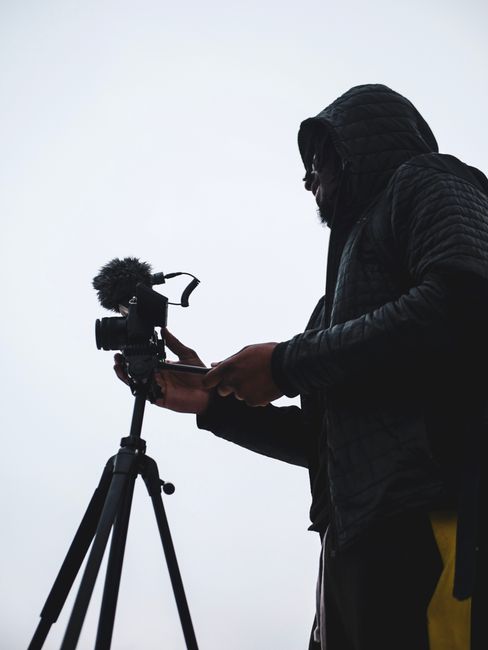
To keep the environment organic, you need to abandon the traditional “broadcast” look. Swap the bright red accents on your gear for matte black tape. Remove the deadcat wind muff if it looks like a dead animal strapped to your rig—opt for a sleek, foam-covered directional mic instead. When you look like a casual observer rather than a predatory YouTuber looking for a reaction, people stop caring that you are there.
Downgrading Your Rig to Upgrade Your Footage
Size matters. Specifically, smaller gear equals less social friction. Years ago, I lugged a full-frame cinema rig through Edinburgh’s Royal Mile. It was a disaster. Every time I raised the camera, shopkeepers tensed up and tourists stopped walking.
These days? I use a pocket-sized compact camera or a smartphone paired with a gimbal. The visual difference on YouTube is negligible, but the psychological impact on bystanders is massive. People are so used to seeing phones in their faces that a smartphone on a mini-tripod is invisible. It registers as “texting” or “taking a quick snap,” not “filming a viral vlog.”
- Ditch the tripod: Unless you are locked down in a park, holding a mini-tripod like a handgrip keeps your elbow close to your body. It looks intentional, compact, and non-threatening.
- Master the waist-level waistline shot: Modern image stabilization is so good that you can film from your chest or waist without looking through the viewfinder. You stop making direct eye contact with the camera, which naturally lowers bystander anxiety.
- Choose discrete audio: Wireless lavalier mics clipped inside your jacket collar capture crisp voice audio without requiring you to hold a microphone up to your mouth like a news reporter.
Navigating Transit Hubs and Private Estates Without Getting Chased Off
If you think filming on a public sidewalk is tricky, try pulling out a camera inside a major UK railway station or shopping district. Security guards will materialize out of thin air faster than you can say “Borough Market.”
Many iconic UK locations—like King’s Cross, the South Bank, and major shopping malls—are technically private property managed under specific bylaws. Familiarize yourself with the Information Commissioner’s Office CCTV and filming rules to understand your boundaries. For transport networks, always review guidelines like the Transport for London filming policy before you roll tape.
When security approaches, don’t argue. Smile, lower your camera immediately, and ask if they need you to move. Nine times out of ten, a polite attitude will earn you leeway. If they say no filming is allowed without a commercial permit, pack up and walk fifty yards down the road. Stubbornness gets your SD card checked or your gear confiscated.
Stealth Movement Drills for Dense Foot Traffic
Moving through a busy British high street while vlogging is an athletic endeavor. You cannot walk backward while staring at a flip-out screen—you will trip over an elderly pedestrian or smash into a bollard.
Instead, adopt the Scout Scan method. Walk forward normally with your camera locked at a low angle. Scan the path ahead with your eyes, not the monitor. Frame your shots using wide-angle lenses that cover a massive field of view, allowing you to crop or stabilize later in post-production. If you need to speak to the camera, do it in short, 10-second bursts while standing stationary against a wall or shop window.
Never block the flow of pedestrian traffic. In London or Manchester, standing still in the middle of a pavement is the ultimate social sin. If you need to do a stand-up piece, step into a doorway, tuck yourself beside a bus shelter, or find a wide public square where people can easily sweep around you.
Frequently Asked Questions
Is it illegal to film people in public in the UK?
No. Generally speaking, there is no expectation of privacy in public spaces across the UK. You are legally allowed to film people on public streets, parks, and pavements. However, harassment laws apply if you persistently follow someone or make them feel unsafe.
Do I need a permit to vlog outside in London?
For standard handheld vlogging on public pavements, you do not need a permit. However, if you use heavy tripods, lighting stands, or film on private estates, railway stations, or managed public spaces (like Trafalgar Square or Covent Garden), local authorities or private security may require prior authorization.
How do I handle audio when vlogging in noisy UK cities?
Wind and traffic noise are the biggest enemies of UK street vloggers. Use a high-quality directional microphone with a furry windshield (deadcat) or, even better, a wireless lapel microphone clipped close to your mouth. This isolates your voice from the roar of double-decker buses and sirens.
What should I do if someone demands I delete my footage?
Remain calm and polite. You are legally not obligated to delete footage filmed in a public place unless you have violated specific security or privacy laws. However, escalating an argument is rarely worth the hassle. Often, calmly explaining that you are a travel creator and offering to blur their face in post-production de-escalates the tension immediately.