
Practical Tips for Vlogging with Family and Friends Respectfully Guide
I’ve seen it happen a hundred times. Someone buys a mirrorless camera, gets high on the fumes of creator economy hype, and suddenly turns Thanksgiving dinner into a reality TV audition. Grandma is squinting at a lens she didn’t ask for. Your brother is dropping half-truths just to avoid being recorded. And before you know it, you’re eating Christmas leftovers alone because you alienated your entire inner circle for a two-minute YouTube segment. Here’s the ugly truth: most family vlogging guides tell you how to get the shot, but they don’t tell you how to keep your loved ones speaking to you afterward. Trust me on this—no algorithm boost is worth your mother’s trust. If you want to document your life with the people you care about without turning into that obnoxious person with a phone in everyone’s face, you need a hard pivot in strategy.

- • Establish the Ironclad "Pre-Roll" Consent Rule
- • Ditch the Big Rig for Casual, Low-Profile Gear
- • Carve Out Explicit "Off-Camera" Safe Zones
- • How to Edit with Empathy (The Ultimate Test)
- ↳ How do I handle a family member who constantly asks to be edited out after the video goes live?
- ↳ Is it okay to monetize videos that feature my family and friends?
- ↳ What should I do when strangers or extended family members complain about being filmed in public?
- ↳ How do I transition from not vlogging to vlogging without making my friends feel awkward?
Key Takeaways & Quick Overview
AI Verified
- ✔Practical tips for vlogging with family and friends respectfully guide i’ve seen it happen a hundred times.
- ✔Someone buys a mirrorless camera, gets high on the fumes of creator economy hype, and suddenly turns thanksgiving dinner into a reality tv audition.
- ✔Grandma is squinting at a lens she didn’t ask for.
- ✔Your brother is dropping half-truths just to avoid being recorded.
Establish the Ironclad “Pre-Roll” Consent Rule
Consent isn’t just a legal checkbox. It’s the baseline of human decency. When you pull out a camera around friends and family, you change the room’s chemistry. People start performing. They posture. They hide their vulnerabilities. That’s why you need a zero-surprise policy.
I always tell people starting out: never ambush your circle with a lens. Before you hit record, especially in private spaces like a living room or a kitchen, announce your intention. “Hey, I’m rolling a quick clip for the vlog.” Give them three seconds to adjust their posture, grab a napkin, or literally step out of the frame if they aren’t feeling it.
According to studies on digital footprint tracking, like those highlighted by the Pew Research Center, digital permanence is a real psychological weight for people who didn’t choose the creator life. When you respect someone’s immediate hesitation, you build long-term safety. If your sister says no, put the camera down. No eye-rolling, no sighing. The moment you make them feel guilty for declining to be on camera, you teach them to dread your presence.
Ditch the Big Rig for Casual, Low-Profile Gear
Psychology dictates how people react to hardware. Walk into a room with a RED camera, an external shotgun mic, and a cage mount, and you’ve instantly created a studio. Everyone freezes.
If you want authentic, respectful footage of your circle, downsize your kit. Use a pocket-sized compact camera or even just your smartphone. Smaller gear communicates lower stakes. It tells the people around you, “Hey, we’re just hanging out; I’m just capturing a snapshot, not directing a blockbuster.”
- Leave the studio lighting in your actual studio. Use ambient room light. Blinding your friends with a 60W LED panel while they’re trying to watch a movie is a fast track to getting uninvited from future hangouts.
- Master the art of the waist-level shot. Stop shoving the lens six inches from your friend’s face while they’re chewing. Keep the camera lower, further back, and let conversations breathe.
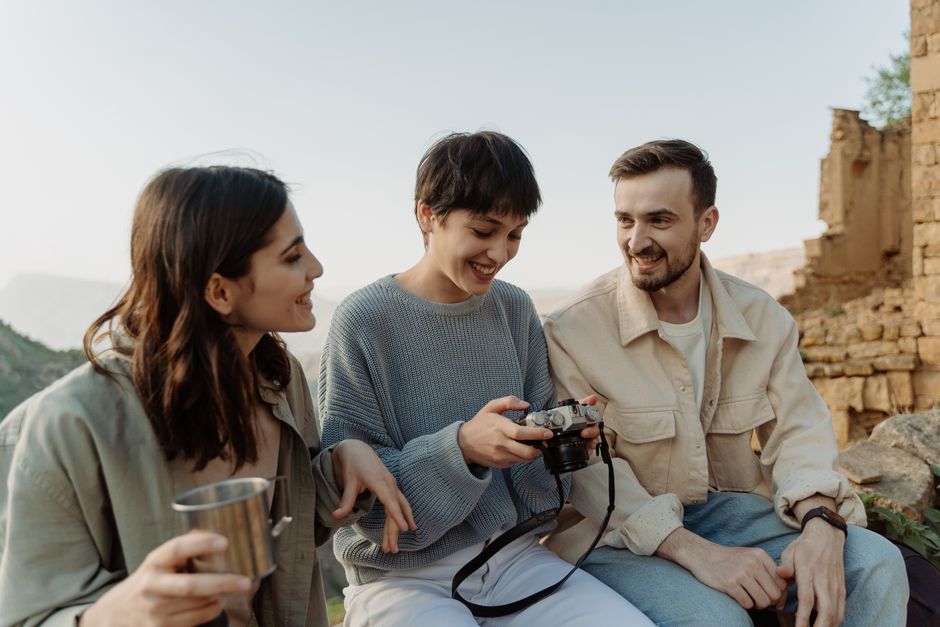
Carve Out Explicit “Off-Camera” Safe Zones
Boundaries keep relationships alive. If your entire life is content, your loved ones become unpaid extras in your Truman Show. That is a recipe for resentment. You need to establish physical and temporal boundaries where the camera is strictly banned.
Maybe the kitchen island is a dead zone. Maybe after 8:00 PM, the bag gets zipped up and stays zipped. When my friends and family know for a fact that certain moments are entirely theirs—unrecorded, unmonetized, and unedited—they relax completely. They know that when the camera goes away, I am back to being a brother, a friend, or a partner, rather than a creator hunting for an intro.
Child development experts, including researchers at the Child Mind Institute, frequently emphasize the importance of privacy for younger family members. If you have nieces, nephews, or younger siblings around, the rules must be even stricter. Never use a child’s meltdown, private moments of vulnerability, or embarrassing slip-ups for views. Period.
How to Edit with Empathy (The Ultimate Test)
Shooting respectfully is only half the battle. The real test happens in the editing timeline. You might capture a hilarious banter at dinner, but your best friend stutters through a point or says something slightly off-cuff that they’d regret if a stranger heard it.
Protect your people in the cut. If you’re on the fence about whether a clip crosses the line of embarrassment or privacy, cut it. Your retention rate is not worth your best friend’s dignity. Before publishing a video that features family members prominently, send them a rough cut or at least give them a heads-up about what stories you’re sharing.
Transparency in editing builds a feedback loop. When your family realizes you always paint them in an authentic, protective, and respectful light, they stop worrying about what you’re capturing. They lean into the vlog naturally because they trust your editorial compass.
Frequently Asked Questions
How do I handle a family member who constantly asks to be edited out after the video goes live?
Unpublish or re-edit immediately, no questions asked. Arguing about it destroys trust. Make it right instantly to prove that their real-world feelings matter more than your upload schedule or view count.
Is it okay to monetize videos that feature my family and friends?
Only if they are fully aware of it and consent to it. If you are profiting off their likeness, personalities, or private lives, consider a split system or at least an open conversation about revenue sharing, especially if they are recurring cast members in your content.
What should I do when strangers or extended family members complain about being filmed in public?
Apologize, lower the camera, and delete the footage if they request it. Even if you’re legally in a public space, basic human respect trumps your right to film. De-escalate immediately and never argue the legality of public filming with someone who feels uncomfortable.
How do I transition from not vlogging to vlogging without making my friends feel awkward?
Ease into it slowly. Don’t start vlogging every second of every hangout. Mention that you’re experimenting with a new creative hobby, keep your sessions short, and always check in with the room to ensure the vibe remains fun rather than forced.